
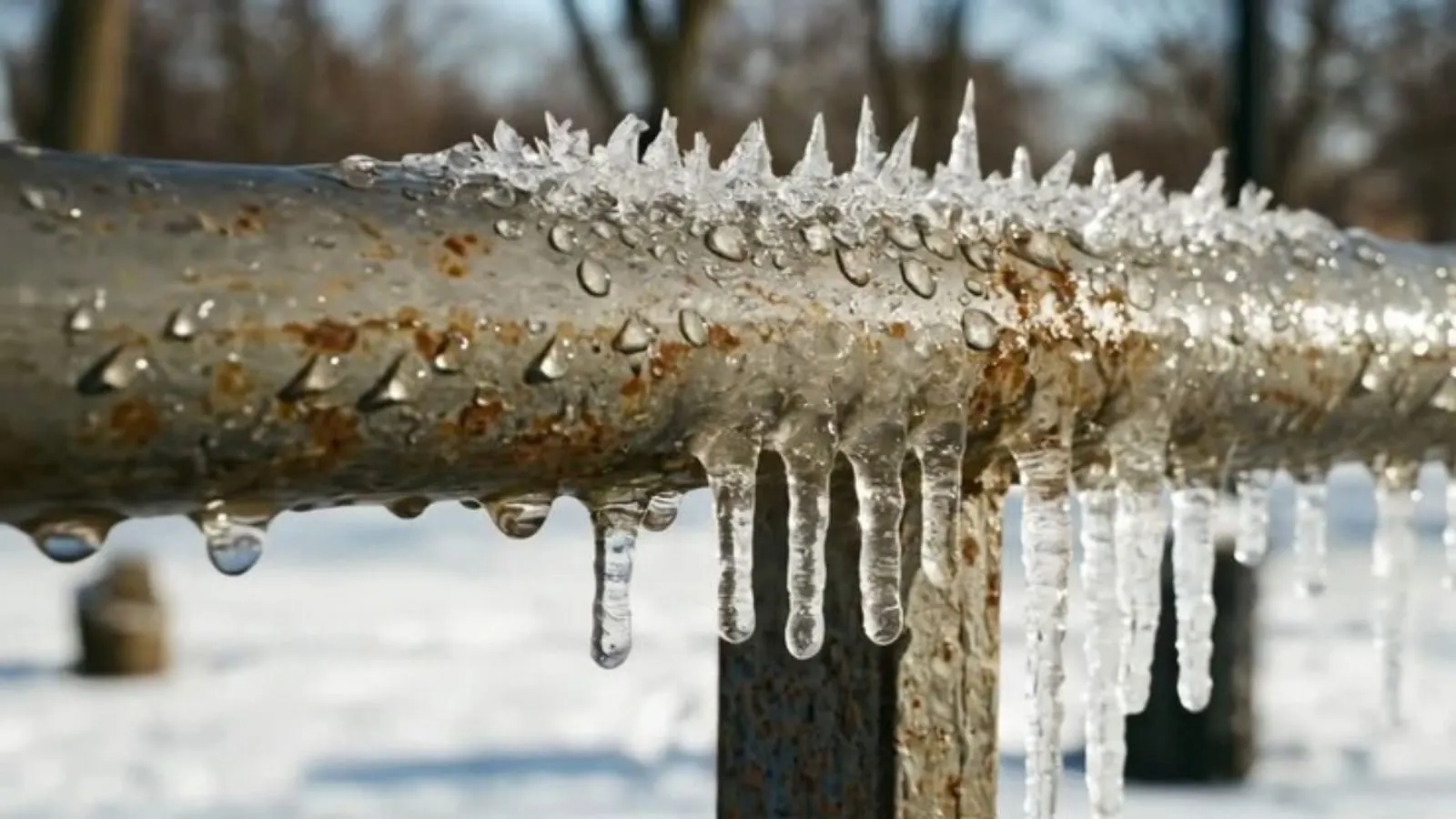
How to Thaw a Frozen Pipe Safely
Keep the faucet open so melting water has somewhere to go.
Open the faucet
Leave the nearest tap open so steam and water can escape.
Find the frozen section
It is usually on an exterior wall, in a crawlspace or in a garage.
Apply gentle heat
Use a hair dryer on low, warm towels or a heating pad. Move heat along the pipe.
Keep going until flow returns
Check other taps. If one pipe froze, others may have too.
Check for leaks
Once flow returns, look for drips or wet spots along the pipe.
What Not to Do
- Do not use an open flame. Torches have started house fires and can damage pipe and nearby framing.
- Do not ignore a split. If a pipe is cracked, shut off the main before thawing.
- Do not use a space heater near water. Electricity and water are a bad mix.
- Do not walk away from a thawing pipe. Stay close so you can shut off water quickly.
Want a Plumber to Look at It?
Call the 24/7 line, any hour.
Lebanon Note: Why Freezes Surprise People Here
The Willamette Valley is a mild climate with wet winters, so many homes are not built for hard freezes. In January 2017, a cold snap across the southern valley led one local plumbing firm to take more than a hundred frozen and burst pipe calls after two or three freezing nights, as reported by KLCC. Lacomb, northeast of Lebanon, recorded a low of about 1 degree Fahrenheit on January 1, 1979.
Guidance from the nearby City of Corvallis, which fits any valley home, advises insulating exposed pipes, keeping the thermostat at 55 degrees or higher, letting faucets trickle during a freeze and never using a torch. The same advice applies in Lebanon.
The thawing and prevention steps here follow guidance published by the City of Corvallis for Willamette Valley homes, and replacement pipe must meet the Uniform Plumbing Code (UPC) as adopted in Oregon.
Where Pipes Freeze Most Often
Know your weak spots before the next freeze.
| Location | Why it freezes | Protection |
|---|---|---|
| Crawlspace | Cold air under the floor. | Foam sleeves and sealed vents. |
| Garage walls | Poor insulation on the outside wall. | Insulate and heat the garage. |
| Under sinks on outside walls. | Cold air behind the cabinet. | Open cabinet doors on cold nights. |
| Outdoor hose bibs | Water left in the line. | Disconnect hoses and drain bibs. |
When to Call a Plumber
Call if you cannot find the frozen section, if the pipe is behind a wall, or if you see a split or a wet ceiling. A pipe that has burst needs a repair, not just thawing. Shut off the main first, then call our 24/7 line.
We reach homes in Sweet Home, Scio and Brownsville too. After the thaw, leak detection can find hidden damage.
A Freeze-Night Checklist for Lebanon Homes
Do these before the forecast low arrives.
- Disconnect and drain hoses. Close the inside valve to outdoor bibs if you have one.
- Open cabinet doors on outside walls. Let room air reach the pipes.
- Set the thermostat no lower than 55 degrees. Even in rooms you do not use.
- Let one faucet trickle. Pick the one farthest from where water enters the house.
- Know where the main shutoff is. Test it so it turns when you need it.
What to Do After the Thaw
After a freeze, check for hidden damage. Walk the house and look at ceilings, walls under bathrooms and crawlspace pipes for stains or drips. Listen for running water when everything is off. Read the water meter before and after a couple of hours with no use.
A split pipe can hold until it warms and then leak. Catching it early keeps the damage small. If you find a leak, shut off the main and call. Our burst pipe repair team answers around the clock.
How Long Can a Frozen Pipe Wait?
A frozen pipe is a risk from the moment it freezes, but not every frozen pipe splits. The danger is greatest when the ice melts and pressure drives water through any crack. If you find a frozen pipe, start thawing early and keep the tap open.
If water is already flowing from a split, shut off the main and call. If you cannot reach the frozen section, such as one in a wall, call before trying to open the wall yourself.
Frozen Pipes: Local Questions
Pipes in unheated spaces can freeze after a few hours below about 20 degrees Fahrenheit, and sooner in wind. Exposed lines are the first to go.
Yes. A slow trickle keeps water moving and helps prevent ice, though it is not a guarantee.
Often it covers the water damage. Check your policy and take photos.
The hot line can freeze too. Warm the section the same way and check the water heater connections.
Yes. Call the line and tell us where the pipe is and what you see.