
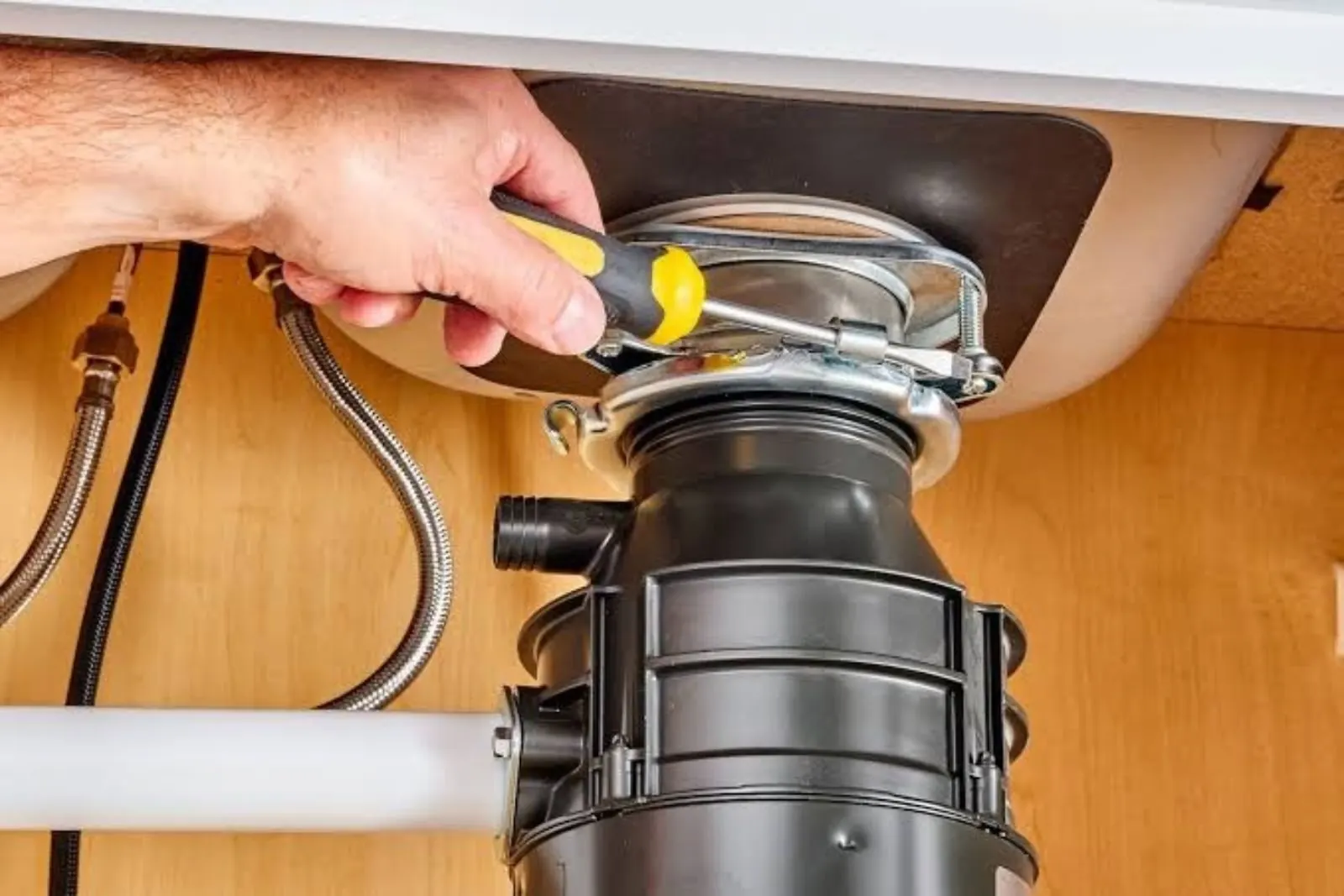
What the Flange Does
The sink flange sits in the drain opening, seals against the sink bowl and holds the mounting assembly for the disposal. A bead of plumber's putty or a rubber gasket forms the seal. If the putty dries out or the flange loosens, water seeps past it.
A leak at the top of the disposal, just under the sink, usually points to the flange. A leak from the unit's sides or bottom points to the housing or its seals, and that often means replacement.
Tools and Materials
- Plumber's putty or the gasket kit. Most new disposals ship with a gasket set.
- A screwdriver and a wrench. For the mounting screws and the locknut.
- A bucket and rags. Expect some water in the trap.
- A helper. The disposal is heavy and awkward to hold in place.
Want a Plumber to Look at It?
Call the 24/7 line, any hour.
Installing the Flange
Follow the manufacturer's instructions for your model if they differ.
Disconnect and remove the old unit
Turn off power, disconnect the drain pipe and dishwasher hose, and lift the disposal off its mount.
Clean the sink opening
Remove old putty and dirt from the sink around the drain.
Seat the new flange
Press a rope of putty around the flange or use the gasket, then set it in the opening from above.
Tighten from below
Attach the mounting parts under the sink and tighten the screws evenly so the flange pulls down.
Trim the squeeze-out and test
Wipe off extra putty, reattach the disposal, then run water and check for leaks.
Putty or Gasket?
Both work when installed well.
| Seal type | Pros | Cons |
|---|---|---|
| Plumber's putty | Fills small gaps and is easy to adjust. | Can dry out over years on some surfaces. |
| Rubber gasket | Clean install and often supplied. | Needs a smooth, flat sink surface. |
Lebanon Note: Check the Drain Beyond the Disposal
If the sink drains slowly after you fix the flange, the clog may be farther down the line. Lebanon homeowners maintain their private sewer lateral under Lebanon Municipal Code 13.04.210, so a repeat kitchen backup is worth a camera look. See sewer inspection.
Older homes near downtown Lebanon often have cast iron or galvanized drain lines that corrode and catch grease. Flange work on a corroded pipe can turn into a bigger repair, so check what you have before you start.
Disposal drain connections follow the Uniform Plumbing Code (UPC) as adopted in Oregon, and the maker's installation guidelines cover the flange and mount.
When to Call a Plumber
Call if the sink drain pipe is corroded, if the mounting parts will not release, if the unit is hardwired or if you see rot in the cabinet floor. We handle disposal repair and replacement across Lebanon, Scio and Brownsville, and the 24/7 line covers leaks that cannot wait. See plumbing installation for new fixtures.
Why Flanges Fail
A flange fails when its seal dries, when the mounting hardware loosens or when the sink moves under the weight of the disposal. Vibration from daily use works screws loose over years. Putty that was applied thin or on a dirty surface never fully seals.
Stainless sinks flex slightly under load, which can break a rigid seal. Composite and porcelain sinks can chip around the opening if the flange is overtightened. Even pressure and clean surfaces make the difference.
Signs the Flange Is the Problem, Not the Disposal
- Water appears at the top of the unit. It runs down from the flange, not up from the housing.
- A ring of moisture shows around the sink drain from below. The seal is wicking water.
- The disposal wobbles. The mounting ring is loose.
- A leak only happens when the sink is full. Water pressure pushes past a weak seal.
Parts That Wear Out Together
A flange job is a good time to check the neighbors.
| Part | What to look for | Action |
|---|---|---|
| Drain trap | Corrosion or a slow drip. | Replace if rough or leaking. |
| Dishwasher hose | Cracks or kinks | Replace if worn |
| Power cord or wiring. | Frayed insulation | Replace or call an electrician. |
| Cabinet floor | Soft or stained wood. | Dry out and repair after the leak is fixed. |
Testing Your Work
After reassembly, fill the sink basin with water and let it drain through the disposal while you watch the connections from below with a flashlight. Run your finger along the flange joint and the drain connections to feel for dampness. Wait ten minutes, then check again.
A small seep right after install often means the screws need another quarter turn. A steady drip means the seal needs to be redone. Test again the next day, since slow leaks need time to show up.
Disposal Flange Installation: Local Questions
The flange seal has likely failed. Remove the unit and reseal the flange with putty or a gasket.
A good seal lasts for years, but putty can dry out over time. Reseal if you see seepage.
Often yes if it is clean and undamaged. A new flange is cheap insurance.
For a plug-in unit, no. For a hardwired unit, turn off the breaker, and consider help if you are unsure.
The housing may be cracked. At that point replacement is usually the right call.