
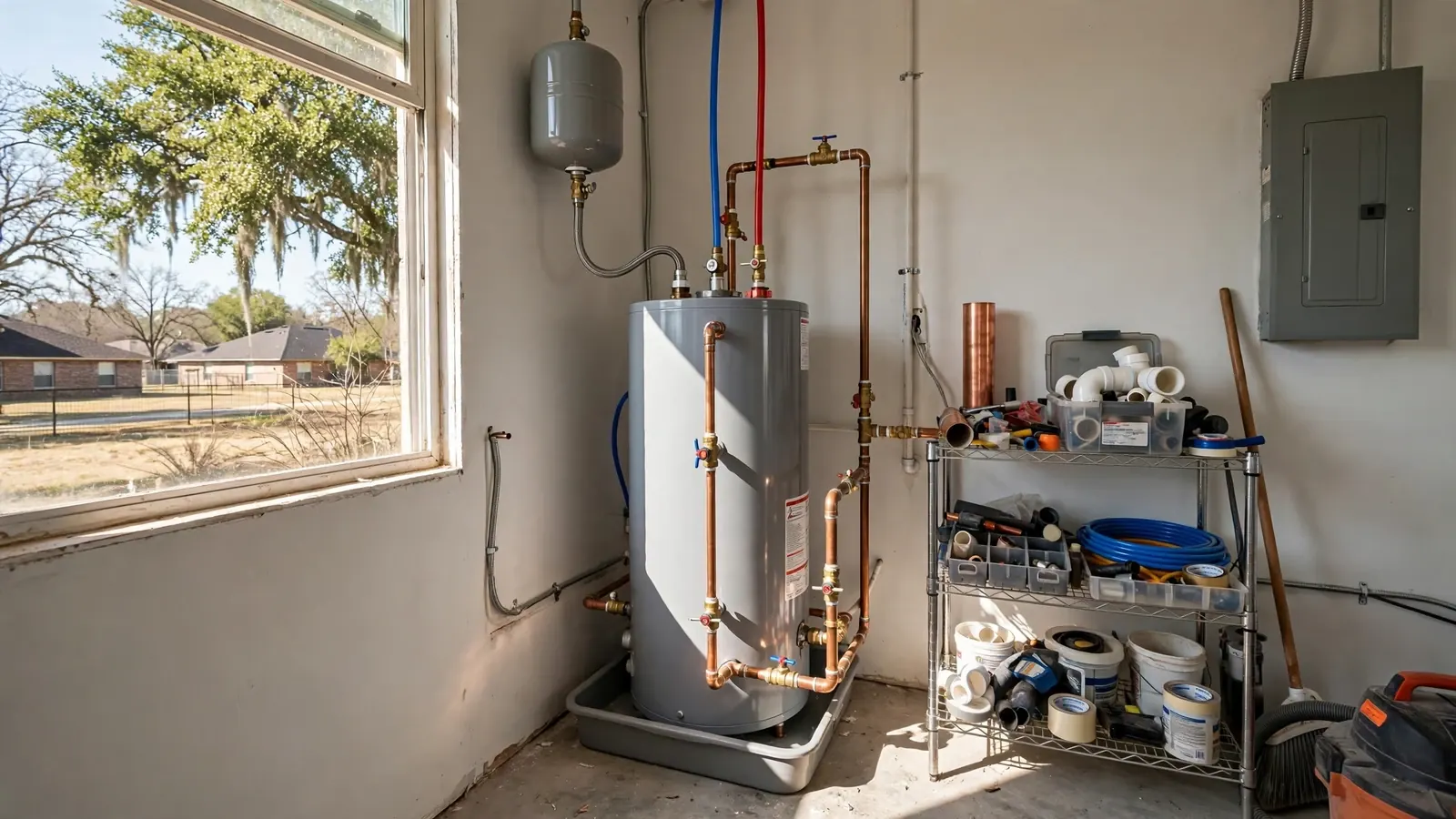
When You Need an Install and Not a Replacement
An install is for a home that is getting a water heater where there was none, or moving the unit to a new place, or changing fuel type. Remodels, additions, accessory dwelling units and new builds are the usual cases. A replacement simply swaps a failed tank in the same spot.
That difference matters because installs often involve new gas lines, venting, electrical circuits or relocated plumbing, and those parts affect both price and permit questions.
Decisions to Make Before You Book the Install
Fuel type
Natural gas, propane and electric each change the venting, wiring and operating cost.
Tank or tankless
A tank stores hot water. A tankless unit heats on demand and needs the right gas and vent.
Size
Match capacity to the number of people and the fixtures that run at the same time.
Location
Garages, closets, crawlspaces and utility rooms each have clearance and drainage needs.
Size Guide by Household
These ranges are a starting point. A plumber checks your actual fixtures before recommending a unit.
| Household | Typical tank size | Notes |
|---|---|---|
| 1 to 2 people. | 30 to 40 gallons. | Good fit for apartments and small homes. |
| 3 to 4 people. | 40 to 50 gallons. | Covers a common family routine. |
| 5 or more people. | 50 to 80 gallons. | Consider a second bathroom load and simultaneous use. |
| Heavy hot water use. | Large tank or tankless. | Soaking tubs and big laundry loads add demand. |
Ready to Plan Your Install?
Call and describe the home and fuel. We will line up a visit and a clear price.
What an Installation Visit Includes
Site check
The plumber confirms clearance, venting path and utility connections.
Rough-in
New supply lines, gas or electric connections and a drain are prepared.
Set and vent
The unit is placed, vented and fitted with required safety parts.
Inspect and test
Connections are checked for leaks and operation before the work is called done.
Lebanon Note: Permits and Inspection
A new water heater install can need a plumbing permit, and gas or electrical work may need its own. The City of Lebanon Building Division administers state codes, and the Oregon Plumbing Specialty Code edition in force is worth confirming with the division before work starts. Ask who pulls the permit so nothing is missed.
Gas piping, venting and drain pans for a new unit are covered by Oregon's adoption of the Uniform Plumbing Code (UPC) and by the maker's installation guidelines, which is why a permit question comes first.
Why Placement Matters in Oregon Homes
Western Oregon homes often have unheated garages and crawlspaces, and Lebanon sees freezing nights each winter. A tank or supply line in an uninsulated space can freeze, and the January 2017 cold snap in the southern Willamette Valley kept plumbers busy with burst pipes for days.
When we plan a placement, we look at insulation, distance to fixtures and drainage. A shorter run to the kitchen and bath means faster hot water and less waste. We install units in homes around Sweet Home and Scio too, and failed tanks go to water heater repair first.
What Affects the Cost of Water Heater Installation
Install pricing depends on how much support work the home needs.
You get a clear price before work starts. Call (503) 974-3329 to schedule.
Water Heater Installation Questions in Lebanon, OR
A straightforward tank install is usually a half day to a full day. Gas line, venting or relocation work extends that.
Yes, with the right clearance, drainage and freeze protection. Garage installs may need an elevated platform for gas units.
Yes. See our tankless water heater page for what to expect and what upkeep they need.
Yes. Installs are planned. If your tank has failed, see emergency water heater replacement.
Removal and haul-off can be added to the job. Ask for it when you request the price.
We can tell you what the work involves, but the City of Lebanon Building Division decides what permits apply.