
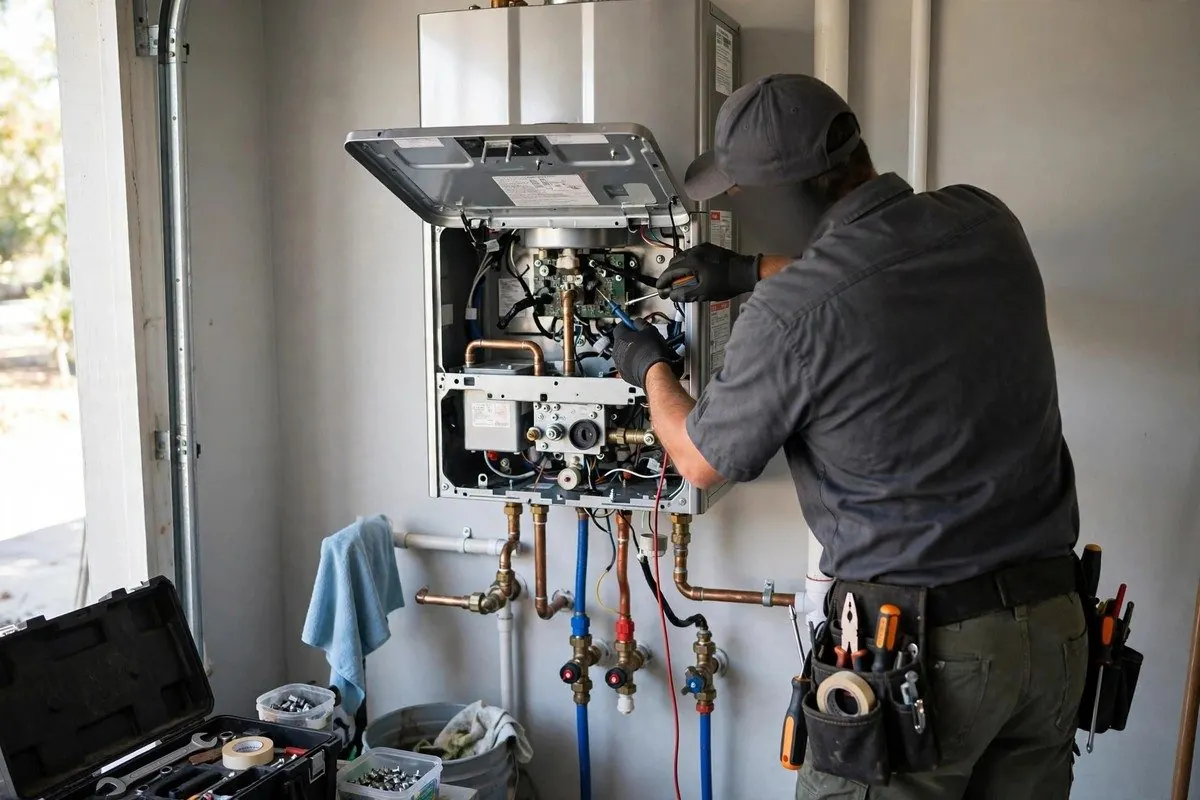
How an Electric Tankless Unit Works
When you open a hot tap, a flow sensor tells the unit to energize its elements. Water passes over them and leaves warm. When the tap closes, the elements shut off. Because nothing is stored, there is no tank to run out, but there is a limit on how many fixtures can draw at the same time.
The unit only heats as much as its power supply allows. A model that is too small for your fixtures delivers lukewarm water when two showers run together.
What to Check Before You Buy
Electrical panel capacity
Many electric tankless units need large dedicated circuits. An older or full panel may need an upgrade before one fits.
Wire size
Heavy circuits need thicker wire. Long runs from the panel add cost.
Flow demand
Add up the fixtures that run together, such as a shower and a dishwasher.
Incoming water temperature
Colder incoming water means the unit works harder to reach the setting.
Want a Plumber to Look at It?
Call the 24/7 line, any hour.
Electric Tankless Compared With an Electric Tank
A quick side by side.
| Factor | Electric tankless | Electric tank |
|---|---|---|
| Space | Wall mounted, small | Floor standing, larger |
| Electrical load | Very high while running. | Moderate and steady |
| Standby heat loss | None | Some |
| Simultaneous use | Limited by unit rating. | Limited by tank size. |
| Upfront cost | Higher, plus possible panel work. | Lower |
We keep this guide generic. Model specs vary by maker, so check the label on the unit you are considering.
Lebanon Note: Cold Incoming Water in Winter
Lebanon sits in the Willamette Valley with mild, wet winters and occasional freezes. Incoming water is colder in winter, so a tankless unit has to raise it more, and flow ratings drop. A unit sized for summer may disappoint in January. When we size a unit, we plan for the cold months.
The City of Lebanon Building Division administers state codes, so confirm with them whether the electrical work for a new unit needs a permit. A licensed electrician does the wiring in most cases, and we coordinate on the plumbing side.
Electrical work for a tankless unit follows the National Electrical Code (NEC), and plumbing connections follow the Uniform Plumbing Code (UPC) as adopted in Oregon.
Upkeep That Keeps It Running
- Flush scale. Mineral buildup coats heating elements and cuts output. Lebanon's published reports do not give hardness, so test your tap.
- Clean the inlet filter. A clogged screen lowers flow.
- Check for leaks. A small drip at a connection can grow.
- Read the display. Error codes help a plumber diagnose.
When Tankless Is Not the Right Choice
A large household with several bathrooms in use at once can overwhelm a single electric unit. A home with limited electrical capacity may face upgrade costs that erase any savings. In those cases a standard tank or a gas unit may fit better.
We install and service units across Scio, Sweet Home and Lebanon. See water heater installation for planning.
Questions to Ask an Installer
Ask what size circuit the unit needs, whether your panel has room and whether the wire run from the panel is short enough to avoid a major upgrade. Ask what the unit does when incoming water is cold and how the flow rating changes. Ask for the manufacturer's published specifications for the exact model, since ratings differ widely.
Ask also who handles the electrical work and the permit. A coordinated installer saves you from a gap between the plumber and the electrician.
Signs an Electric Tankless Unit May Not Suit Your Home
- A small or full electrical panel. The upgrade cost may erase any savings.
- Several bathrooms used at once. One unit may not keep up.
- Very cold incoming water. Flow drops as the temperature rise grows.
- Frequent power outages. No power means no hot water.
Running Costs and Realistic Expectations
Electric tankless units avoid standby loss, but they draw heavy current while running, and what that means for your bill depends on your rates and use. A household that showers briefly and uses little hot water can see savings, while a heavy-use household may not.
We do not publish saving claims because they vary by home. Ask for the unit's rated efficiency and compare it with your tank's label. A plumber can help you run the comparison for your home.
Backup Plans for Outages
An electric tankless unit stops when power stops. In the Willamette Valley, winter storms can knock out power for hours, and a household with no hot water during an outage may find that frustrating. A tank with a full reservoir keeps some hot water available even without power.
If outages are common where you live, weigh that against the benefits. Some households add a small generator or choose a tank for that reason.
Electric Tankless Water Heaters: Local Questions
Most need dedicated heavy circuits. Check your panel and ask an electrician before buying.
Yes, if sized for colder incoming water. Flow ratings drop as incoming temperature falls.
It avoids standby loss, but electricity cost and your usage decide the real difference.
Sometimes. It depends on panel capacity, wiring and plumbing connections. A site visit answers it.
The published reports we reviewed did not list hardness. Test your own tap or ask the City.