
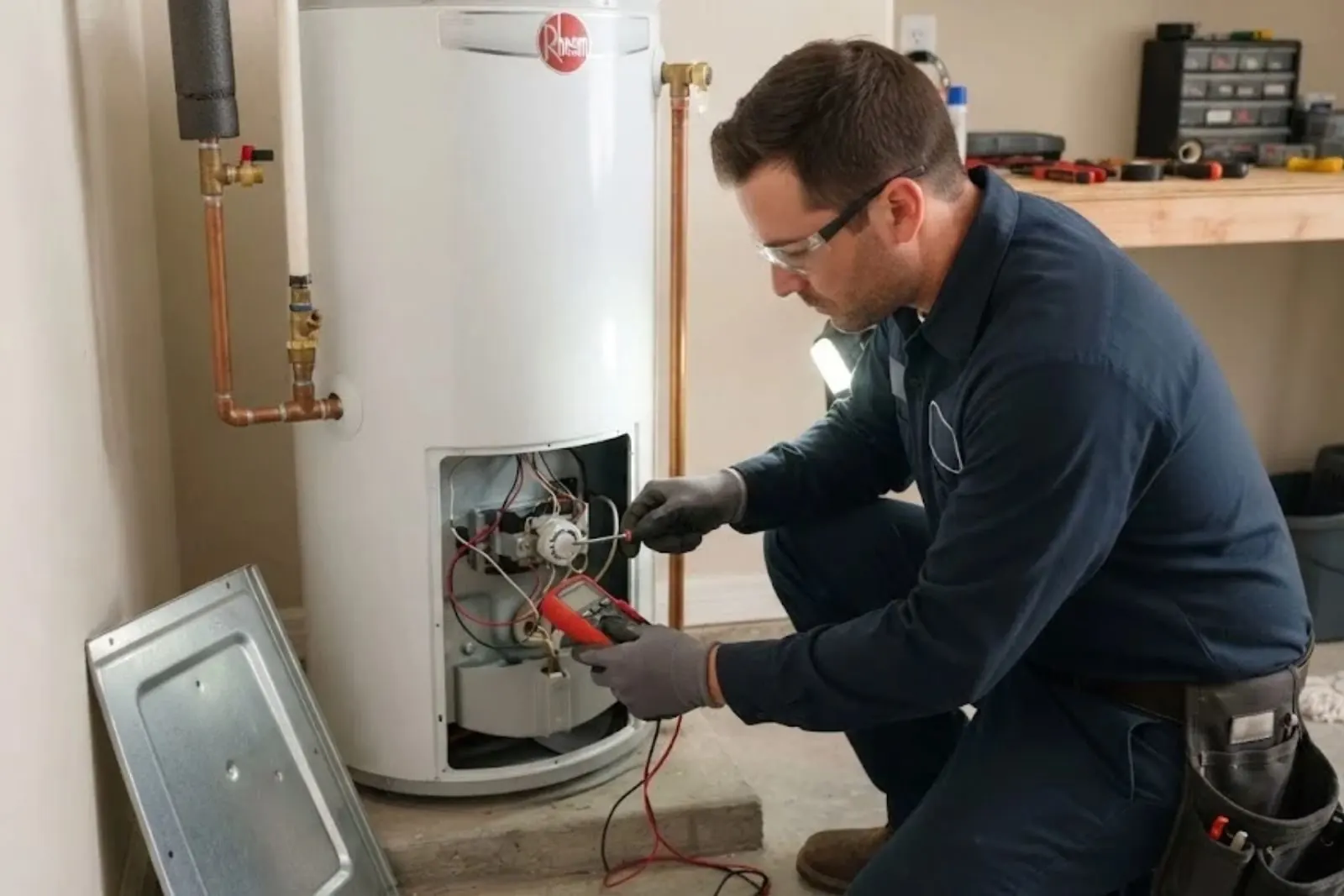
Start With the Cold-Versus-Hot Test
Run a cold tap and then a hot tap at the same sink. If cold is strong and hot is weak, the restriction is on the hot side, somewhere between the heater and the fixtures. If both are weak, the problem sits on the supply side, such as a failing regulator or a service line.
Check more than one fixture. If every hot tap is weak, look at the heater. If only one tap is weak, the fixture itself is clogged.
Common Causes After a Heater Change
| Cause | How to spot it | Fix |
|---|---|---|
| Partly closed shutoff valve. | Handle not fully open. | Open it all the way. |
| Kinked or crushed flex line. | Bend near the heater. | Straighten or replace the line. |
| Clogged inlet screen or filter. | Debris after the work. | Clean the screen |
| Sediment in the lines. | Weak flow at many taps. | Flush fixtures and aerators. |
| Expansion tank or valve problem. | Pressure spikes or drops. | Have a plumber test. |
Want a Plumber to Look at It?
Call the 24/7 line, any hour.
Quick Checks You Can Do
Open the heater valves fully
Both the cold inlet and the hot outlet should be wide open.
Inspect the flex lines
Look for kinks, sharp bends or crushed sections.
Clean the faucet aerators
Unscrew the tip and rinse out debris.
Flush the lines
Run hot taps for a few minutes to push out debris loosened during the work.
Lebanon Note: Debris After Work and Service Lines
Work on a water heater can stir debris in the lines, especially in older homes where galvanized pipe sheds rust. Lebanon's city report advises running the tap 30 seconds to 2 minutes after water sits, and it lists a pH average near 7.7 that is adjusted for corrosion control. That helps the mains but cannot stop old rust inside house pipes.
If pressure is weak at both hot and cold, the service line from the meter may be the issue. The owner maintains the line past the meter, so a water line repair check may be next.
Pressure limits and expansion tank requirements come from the Uniform Plumbing Code (UPC) as adopted in Oregon, and the manufacturer's guidelines cover your heater's connections.
When to Call a Plumber
Call if checks do not restore flow, if the heater shows an error, if you see a leak at the connections or if pressure surges. We can test pressure, inspect the heater and trace the restriction. For failing pipes, see repiping.
We serve Lebanon, Sweet Home and Scio, and the 24/7 line is open for leaks or total loss of hot water.
Why the Work Itself Can Cause It
When a heater is drained, replaced or serviced, air and loose debris enter the lines. Mineral flakes from the old tank bottom, bits of pipe thread tape and rust from old fittings can all travel to the nearest screen or aerator. A fixture with a fine screen will clog first, so the weakest tap in the house is often the first clue.
Opening each hot tap in turn for a minute lets air and debris out. If the water spits and then settles, the issue was air. If flow stays weak at every tap, something larger is restricting it.
Signs the Problem Is Bigger Than a Valve
- Pressure surges when the heater runs. An expansion tank or pressure regulator may be failing.
- Weak flow at every hot tap. A clogged heater outlet or collapsed flex line is likely.
- Rust-colored hot water. Old galvanized pipe may be shedding scale.
- Hissing at the heater. A leak or a stuck relief valve needs prompt attention.
What a Plumber Will Check
A plumber starts with a pressure gauge on a hose bib to see static pressure, then checks the heater connections, the inlet valve and any pressure regulator. If the flow is restricted, they trace it from the heater out to the farthest fixture.
Most fixes are modest. A bad flex line, a closed valve or a clogged screen takes minutes to correct. The harder cases involve aging supply pipe, and those point toward repair or replacement of the affected lines.
Pressure Versus Flow: Two Different Problems
Pressure is the force in the pipe, and flow is how much water comes out. A weak shower can mean low pressure, low flow or both. A partly closed valve reduces flow without changing the pressure on the supply side.
A gauge on a hose bib reads static pressure. Normal household pressure is often in the range of 40 to 80 psi, and the exact acceptable range is best confirmed with your plumber or the code in force. If static pressure is fine and flow is weak, the restriction is downstream.
Hot Water Pressure: Local Questions
A restriction on the hot side, such as a valve, kinked line or clogged screen, limits flow after the heater.
Yes. Debris can clog aerators and screens, especially after plumbing work.
Yes, as a routine upkeep step. Many manufacturers suggest yearly flushing.
No. That suggests a supply side issue, such as a regulator or service line.
Yes. We can test pressure and trace the cause. Call to schedule.