
How a Buried Leak Shows Up
Buried leaks are quiet. You may notice a soggy patch of lawn, a sunken spot, a hissing sound near the meter, lower pressure or a higher bill. Warm spots on a slab floor can mean a hot water line leak under the house, which is a different problem.
The line can leak for a long time without surfacing, especially in well-drained soil. That is why the meter test matters.
The Meter Test
Turn off everything
No taps, no washer, no dishwasher and no ice maker.
Read the meter
Note the numbers and look at the small leak indicator.
Wait 15 to 30 minutes
Do not use any water.
Read it again
If the numbers moved or the indicator spins, water is escaping.
If the meter moves, close the main valve at the house and check again. If it stops, the leak is inside the house. If it keeps moving, the leak is between the meter and the house.
Want a Plumber to Look at It?
Call the 24/7 line, any hour.
How Plumbers Pin Down the Spot
| Tool | How it helps |
|---|---|
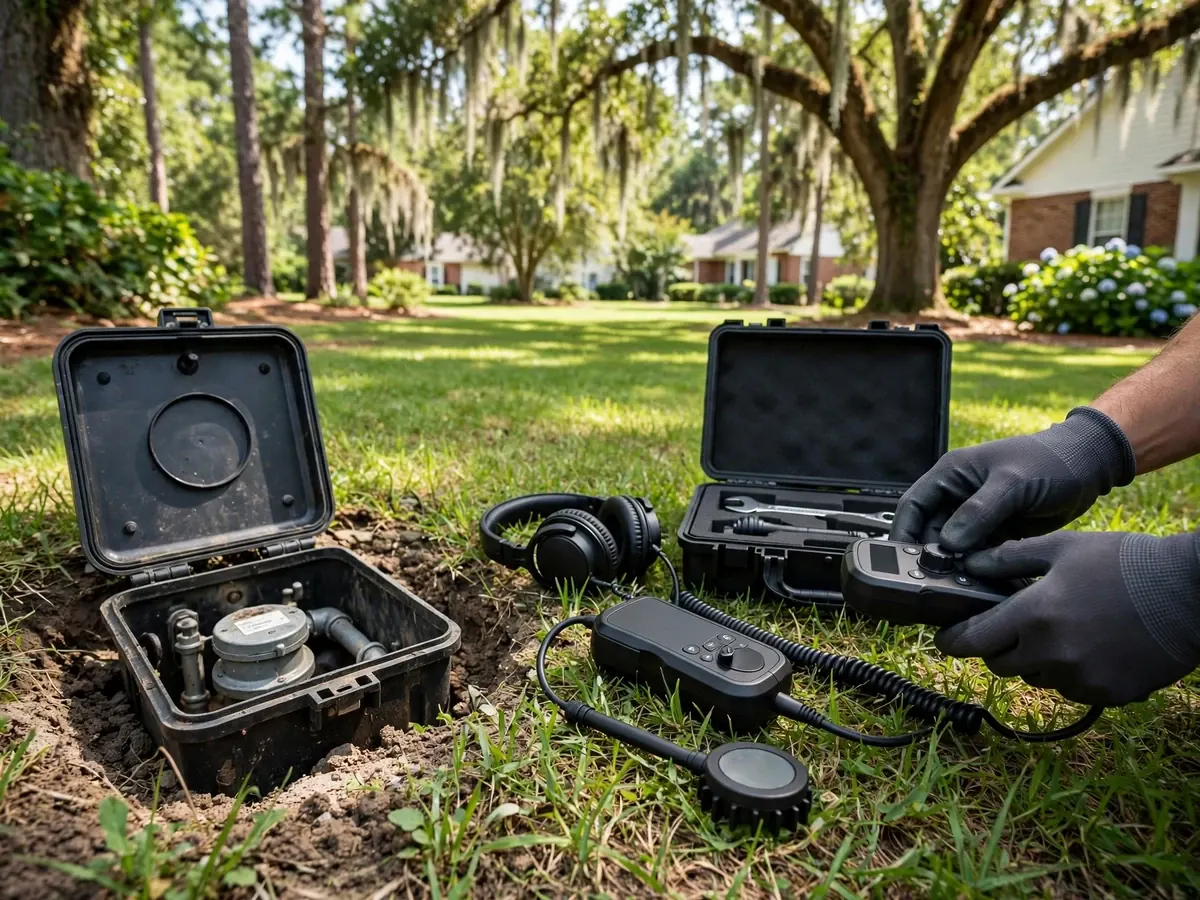
| Acoustic listening device | Picks up the sound of escaping water along the pipe. |
| Pipe locator | Traces the path and depth of the line. |
| Pressure test | Isolates which section loses pressure. |
| Thermal camera | Shows warm spots from hot water leaks. |
Lebanon Note: Where the City Stops and You Start
The City of Lebanon provides treated water from the South Santiam River. The city generally maintains its side up to the meter, and the line from the meter to your house is usually the owner's. Ask the city to confirm where your boundary sits before you pay to dig.
Call 811 before any digging so buried utilities are marked. Wet winters keep Lebanon soil saturated, which can hide a leak and make the ground soft around a dig.
Oregon's 811 utility notification system and the Uniform Plumbing Code (UPC) as adopted in the Oregon Plumbing Specialty Code are the references for digging and for the replacement line.
Repair Options After Detection
Once the leak is found, repair depends on how much pipe is damaged. A short section may be replaced in a small trench. A failing run may be replaced in full. See water line repair for the options.
We serve homes in Lebanon, Scio and Brownsville, where service line rules differ by town. Brownsville's code, for instance, makes the customer responsible for the service line and requires a control valve.
Hot Spots by Season
Some leaks show up more at certain times.
| Season | What changes | What to watch |
|---|---|---|
| Winter | Freezes crack shallow lines. | Wet spots after a thaw and a sudden bill rise. |
| Spring | Wet ground hides leaks. | Soft lawn that never dries. |
| Summer | Irrigation increases use | Bill rise that you assume is watering. |
| Fall | Ground shifts after dry months. | Hissing near the meter. |
What a Locate Visit Looks Like
A plumber starts by reading the meter to confirm the leak, then closes the house shutoff to separate the line from the plumbing inside. A pressure test isolates the section. Listening gear then pinpoints the spot, and the plumber marks it with paint or a flag.
You see where the problem is before any digging, and the repair scope is clear. That keeps the yard damage small and the price predictable.
Protect Yourself Before You Dig
- Call 811. Buried gas, power and communication lines must be marked first.
- Confirm the boundary. Ask the city where its responsibility ends.
- Get a price for the full job. Include restoration of paving or landscaping.
- Keep photos. They help with insurance and with any warranty question.
Common Myths About Buried Leaks
One myth says a leak always shows as a wet spot. It does not, especially in free-draining soil. Another says a high bill proves a leak, when seasonal use, a running toilet or an irrigation system can do the same. A third says a leak is always at the meter, when it can be anywhere along the line.
The meter test cuts through these. It tells you whether water is moving when it should not be, and whether the leak lies inside the house or outside. That one fact saves money on the next step.
What to Tell the Plumber
Good notes save time on site.
- Meter reading and time. Write down the numbers before and after your test.
- Bill history. If you can, note which months jumped.
- Soft or wet spots in the yard. Take photos and mark them.
- Pressure changes. Note when the drop began.
Cost of Waiting
A small buried leak wastes water every hour, adds to your bill and can undermine paving or soil around the pipe. It also lets contaminants into the line if pressure drops. Acting early keeps the repair small and avoids settlement damage.
Main Water Line Leak Detection: Local Questions
Close the main valve at the house. If the meter still moves, the leak is between the meter and the house.
Yes. A buried leak can drain into soil without surfacing.
Not usually. Listening gear finds the spot first so excavation is small.
It depends on the policy. Some offer an endorsement for service lines.
Yes, before any dig, so utility lines are marked.